

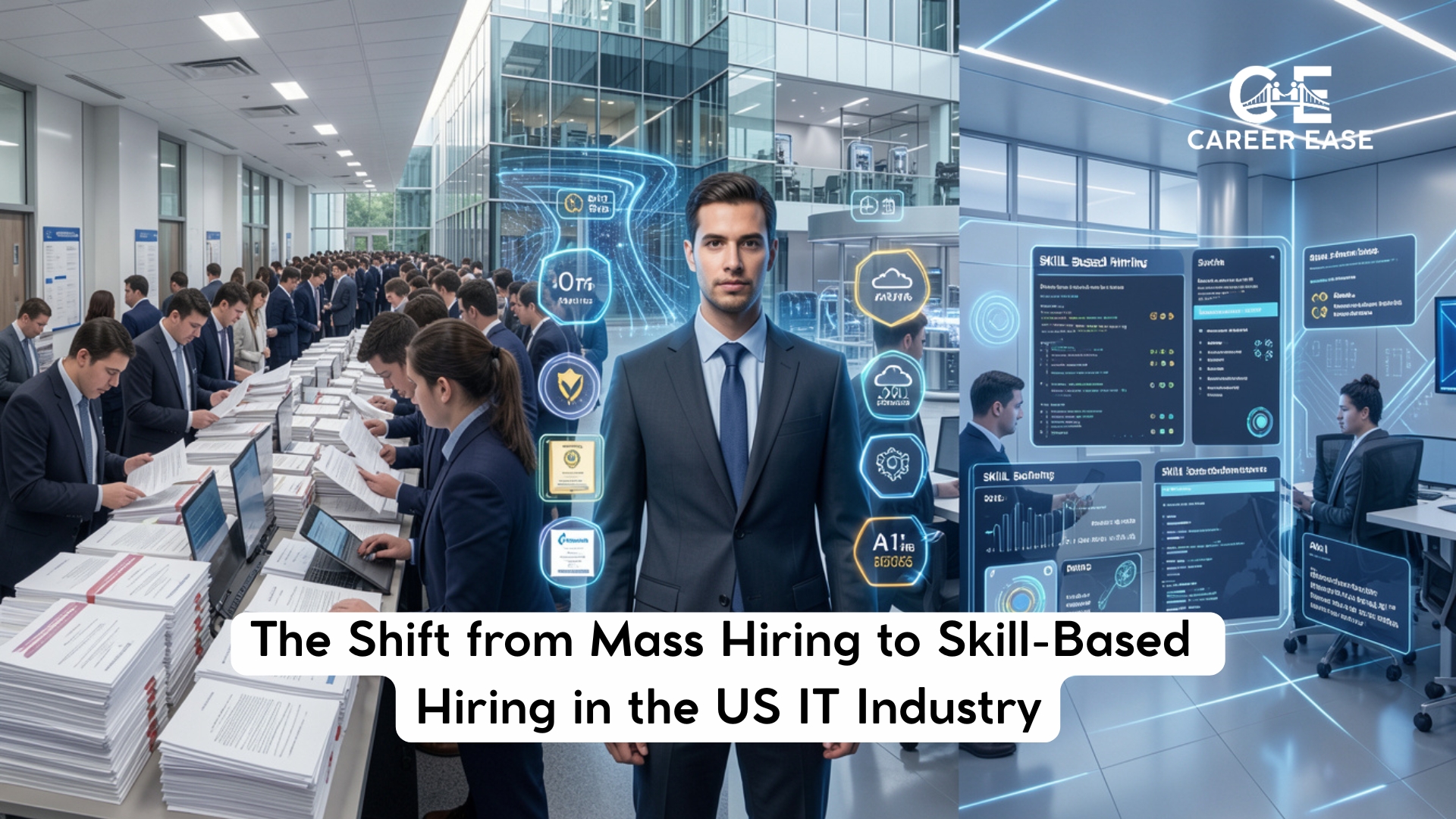
The Shift from Mass Hiring to Skill-Based Hiring in the US IT Industry
The hiring landscape in the US IT industry has changed dramatically over the past few years. During periods of rapid digital transformation, many organizations focused on mass hiring to meet growing technology demands. Companies competed aggressively for talent, often prioritizing headcount expansion over specialized expertise. Today, the focus has shifted. Employers are becoming more selective, emphasizing practical skills, business impact, and technical capabilities rather than simply filling positions. As technology continues to evolve, organizations are looking for professionals who can solve problems, adapt quickly, and contribute measurable value from day one.
For job seekers, understanding this shift is essential. Success in today’s market depends less on the number of applications submitted and more on demonstrating relevant skills and expertise. This article explores why skill-based hiring is becoming the new standard in the US IT industry and what professionals can do to stay competitive.
Understanding the Era of Mass Hiring
Mass hiring became common during periods of rapid growth, particularly when organizations accelerated digital transformation initiatives. Companies needed large numbers of professionals in areas such as:
- Software Development
- Cloud Computing
- Data Analytics
- IT Support
- Cybersecurity
- Project Management
During these hiring surges, employers often focused on filling positions quickly to meet business demands. While qualifications and experience remained important, hiring decisions frequently prioritized speed and scalability.
Why the IT Industry Is Moving Toward Skill-Based Hiring
Today’s business environment requires greater efficiency, productivity, and specialization. Organizations are no longer asking:
“How many people can we hire?”
Instead, they are asking: “Who can solve our most important business challenges?”
Several factors are driving this transformation.
Rapid Technological Change
Technology evolves faster than ever before. Skills that were highly valuable five years ago may now be outdated. Employers need professionals who can adapt to:
- Artificial Intelligence
- Cloud Infrastructure
- Automation
- Cybersecurity Threats
- Data-Driven Decision Making
This makes practical expertise more valuable than generic experience alone.
Increased Competition
Businesses face greater pressure to maximize productivity while controlling costs. Hiring managers increasingly seek candidates who can deliver immediate results and contribute to strategic objectives.
Better Hiring Technology
Modern recruitment platforms, AI-powered screening tools, and skills assessments allow employers to evaluate candidates more effectively. This enables organizations to focus on capabilities rather than relying solely on degrees or job titles.
What Skill-Based Hiring Means for Job Seekers
Skill-based hiring focuses on what candidates can do rather than where they worked or what degree they earned. Recruiters evaluate:
- Technical competencies
- Certifications
- Portfolio projects
- Problem-solving abilities
- Industry knowledge
- Real-world accomplishments
Candidates who can demonstrate measurable results often gain a competitive advantage over those who rely solely on credentials.
The Most In-Demand Skills in the US IT Industry
As organizations adopt skill-based hiring practices, certain competencies continue to attract significant recruiter attention.
Artificial Intelligence and Machine Learning
AI is transforming industries across healthcare, finance, retail, and technology. High-demand skills include:
- Machine Learning
- Generative AI
- Natural Language Processing
- AI Automation
- Predictive Analytics
Cloud Computing
Cloud adoption remains a top priority for organizations. Popular skills include:
- AWS
- Microsoft Azure
- Google Cloud Platform
- Kubernetes
- Docker
- Infrastructure Automation
Cybersecurity
Cyber threats continue to increase globally. Organizations actively seek professionals skilled in:
- Security Operations
- Ethical Hacking
- Risk Assessment
- Cloud Security
- Compliance Management
Data Analytics
Businesses increasingly depend on data-driven decision-making. Valuable skills include:
- SQL
- Python
- Tableau
- Power BI
- Data Visualization
- Business Intelligence
Certifications Are Becoming More Valuable
While degrees remain important, certifications often provide direct evidence of specialized expertise. Recruiters frequently prioritize candidates with certifications such as:
- AWS Certified Solutions Architect
- Microsoft Azure Certifications
- Certified Information Systems Security Professional (CISSP)
- CompTIA Security+
- Google Cloud Certifications
- Data Analytics Certifications
Certifications demonstrate commitment to continuous learning and industry relevance.
Employers Want Proof of Skills
One major characteristic of skill-based hiring is the emphasis on practical validation. Recruiters increasingly evaluate:
Portfolio Projects
Projects showcase real-world problem-solving abilities.
Technical Assessments
Employers use coding challenges, case studies, and skills tests to evaluate competency.
Professional Contributions
Open-source projects, technical blogs, and industry participation strengthen professional credibility. Candidates who can demonstrate results often outperform those who rely solely on resumes.
How LinkedIn Supports Skill-Based Hiring
LinkedIn has become a critical platform in the modern hiring process. Recruiters use LinkedIn to verify:
- Technical expertise
- Certifications
- Professional achievements
- Industry involvement
- Recommendations
Professionals who actively showcase skills and accomplishments increase their visibility during the job search in USA.
Adapting Your Job Search Strategy
The shift toward skill-based hiring requires candidates to rethink traditional job search approaches.
Focus on Skills, Not Just Titles
Instead of emphasizing job titles, highlight:
- Technical expertise
- Business outcomes
- Project success
- Certifications
Customize Applications
Align resumes with role-specific requirements and industry keywords.
Continue Learning
Technology evolves rapidly. Professionals who consistently update their skills remain more competitive and attractive to employers. A strong job strategy in US prioritizes continuous growth and measurable expertise.
What This Means for the Future of Hiring
Skill-based hiring is expected to become even more common across the technology sector. Organizations increasingly recognize that practical capabilities predict performance more accurately than traditional qualifications alone. The future workforce will likely be defined by:
- Continuous learning
- Specialized expertise
- Adaptability
- Demonstrated achievements
- Cross-functional skills
Professionals who embrace lifelong learning will be best positioned for long-term career success.
The End Note:
The US IT industry is moving beyond mass hiring and toward a more strategic, skill-focused approach to recruitment. Employers are prioritizing professionals who can demonstrate technical expertise, business value, and the ability to adapt in a rapidly changing environment. For job seekers, this shift presents both challenges and opportunities. By investing in skill development, certifications, portfolio projects, and professional branding, candidates can position themselves as high-value contributors in today’s competitive technology market. The future belongs to professionals who continuously learn, evolve, and showcase what they can do—not just where they’ve worked.
At Career Ease IT Solutions, we help professionals build ATS-friendly resumes, strengthen LinkedIn profiles, identify in-demand skills, and develop effective strategies for securing opportunities in the evolving US technology landscape. Whether you’re entering the workforce or advancing your career, Career Ease can help you stand out where it matters most.
Visit www.careereaseitsolutions.com and take the next step toward your future in the US IT industry.